

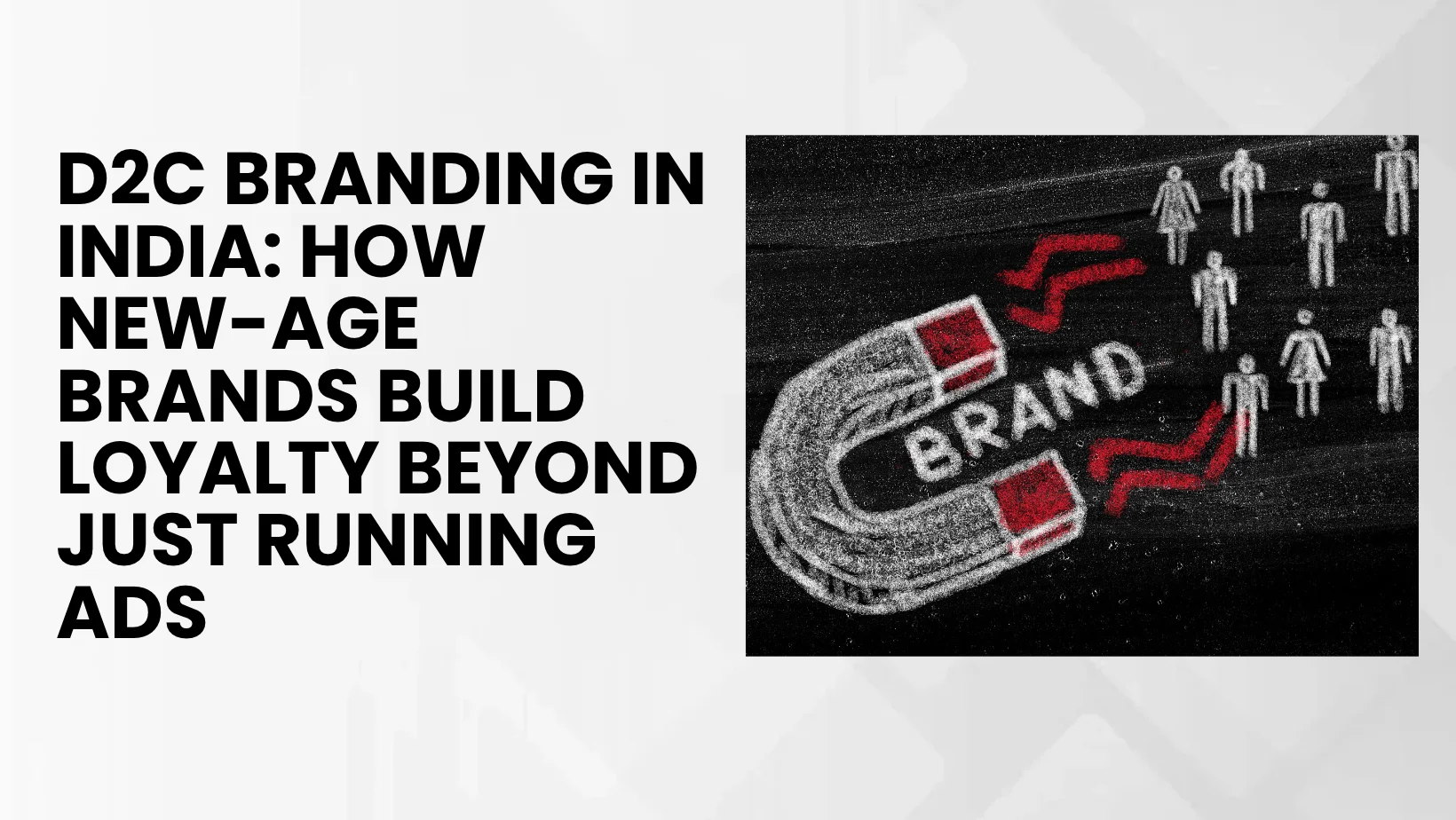
India’s D2C boom has produced an enormous number of brands that look, launch, and advertise almost identically: a clean Instagram grid, a Meta ad campaign, a discount code, and a hope that the math works out. For a while, it often did — cheap ad inventory made it possible to acquire customers profitably almost regardless of brand strength. That era is largely over. Acquisition costs across Meta and Google have climbed steadily for years, and a growing number of D2C founders are discovering the uncomfortable truth that running ads was never the actual business model — it was just how they were buying attention while the real business, the brand, was still being figured out.
The D2C brands pulling ahead now aren’t necessarily spending more on ads than everyone else. They’re spending differently, because they’ve built something ads alone can’t buy: a reason for customers to come back without needing to be re-targeted into doing it.
Why “D2C” and “Running Ads” Stopped Being the Same Thing
D2C simply means selling directly to the consumer rather than through a retailer or marketplace — it says nothing about how that selling actually happens. Early on, that distinction didn’t matter much, because performance advertising was cheap enough to carry weak brands to real revenue. As costs rose, that subsidy disappeared, and brands that had never built genuine recall or loyalty found their unit economics collapsing the moment ad costs ticked up or a platform algorithm shifted. The brands that survived that shift were the ones where a meaningful share of revenue was coming from repeat purchases and word of mouth rather than fresh paid acquisition every single time — in other words, brands people actually trusted and remembered, not just brands they’d clicked on once.
The Full-Funnel Reality of Modern D2C
A genuinely strong D2C business has to work as one connected system rather than a series of disconnected tactics. Performance marketing on Meta and Google still matters — it’s usually the fastest way to get in front of new customers — but it needs to connect seamlessly to a website and checkout experience built to actually convert that traffic, rather than leaking sales at the cart stage. Beyond acquisition, consistent social media presence, influencer and user-generated content campaigns, and direct channels like email and WhatsApp marketing are what carry a customer from a first purchase into repeat behaviour and eventually into genuine advocacy — the kind of customer who recommends the brand unprompted, which is the cheapest and most valuable acquisition channel any D2C brand can have.
The brands that get this wrong usually invest heavily in one piece of this funnel — typically paid acquisition, because it’s the most visible and most easily scaled — while neglecting the retention and loyalty mechanisms that determine whether a first-time buyer ever comes back. The result is a business that looks busy and active on the surface but is quietly burning cash acquiring the same customers over and over because almost nobody returns organically.
Email and WhatsApp: The Underused Retention Engine
Social media gets most of the attention in D2C marketing conversations, but email and WhatsApp marketing are consistently where the highest-value, lowest-cost retention work actually happens, because they’re direct, owned channels rather than rented attention on someone else’s platform algorithm. A customer who’s already purchased once is dramatically cheaper to sell to again than a brand-new customer acquired through paid ads, and a well-run email or WhatsApp sequence — post-purchase care tips, early access to new launches, personalised recommendations based on past purchases — keeps that relationship active without requiring continuous ad spend to re-earn attention each time.
Influencer and UGC Campaigns: Why Authenticity Now Outperforms Polish
Indian consumers, particularly younger ones, have become considerably more skeptical of polished, obviously-produced brand advertising, and correspondingly more responsive to content that looks like it came from a real person rather than a studio. This is why influencer partnerships and user-generated content campaigns have become central to D2C strategy rather than a nice-to-have add-on — a genuine customer review or an influencer’s unscripted reaction to a product frequently outperforms a perfectly produced ad, both in engagement and in actual conversion, because it reads as trustworthy in a way brand-produced content increasingly doesn’t.
Why Attribution and Analytics Matter More as Channels Multiply
As a D2C brand’s marketing spreads across performance ads, social, influencer campaigns, email, and WhatsApp simultaneously, understanding which of these channels is actually driving the sale becomes genuinely difficult — and genuinely important, because budget allocated to a channel that looks active but isn’t actually converting is budget quietly wasted. Proper analytics and attribution are what let a brand tell the difference between a channel that’s working and one that merely looks like it’s working, which becomes essential once a brand has scaled past the point where gut feeling about “what’s working” is still reliable.
What This Means for a Brand Just Starting Out
A new D2C brand doesn’t need every piece of this built on day one, and trying to do so usually spreads resources too thin to execute any of it well. The realistic starting sequence is to get the fundamentals solid first — a conversion-optimised website, a clear brand identity, and a focused performance marketing effort on one or two channels — before layering in the retention mechanisms (email, WhatsApp, loyalty touchpoints) and amplification tactics (influencer and UGC campaigns) that compound over time. The brands that scale sustainably are the ones that build this sequence deliberately rather than trying to run every channel at once from the outset.
Frequently Asked Questions About D2C Marketing
Is D2C marketing just a more polished version of running Meta and Google ads?
No. Paid advertising is typically the acquisition layer of a full D2C strategy, but sustainable D2C growth depends just as much on e-commerce website optimisation, social media and influencer content, and direct retention channels like email and WhatsApp that keep customers coming back without continuous ad spend.
How do you turn one-time website visitors into repeat customers?
Mainly through direct retention channels, including email and WhatsApp marketing, post-purchase engagement, and loyalty touchpoints, combined with a product and brand experience strong enough to earn a second purchase without needing to be re-advertised to from scratch.
Can a new D2C brand with a small budget still compete?
Yes, but it means prioritising sequence over breadth. Get the website, brand identity, and one or two acquisition channels right first, rather than spreading a limited budget thin across every available channel simultaneously.
Why do influencer and UGC campaigns matter if a brand already runs paid ads?
Because authentic, non-studio content frequently converts better than polished brand advertising, particularly with younger Indian consumers who have grown more sceptical of obviously produced ads. It provides a different trust signal that paid ads alone cannot replicate.
How do you know which marketing channel is actually driving sales once you’re running several at once?
Through proper analytics and attribution tracking, which becomes essential once a brand’s marketing spans multiple channels simultaneously. Without it, budget often continues flowing to channels that look active but aren’t the ones actually converting.
If your D2C brand is leaning entirely on paid acquisition and feeling the squeeze as costs climb, it’s worth building out the fuller funnel instead. You can see how Globelectra approaches this on the D2C & E-Commerce Marketing page, or get in touch to talk through a full-funnel plan for your brand.